
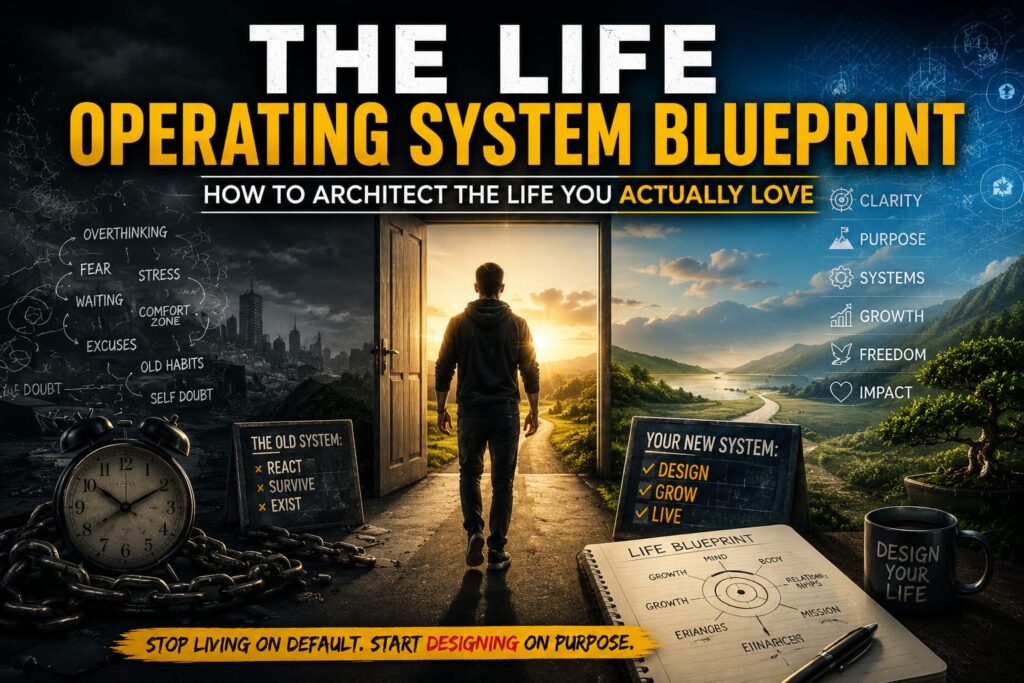
Do you ever feel like you are just drifting through life, reacting to emails, chores, and endless notifications? You are not alone. Most of us are living on autopilot, running programs installed by society, stress, or old habits.
If you want to transform your life, you do not need a temporary fix. You need a complete system update. Welcome to your Life OS, or Life Operating System.
1. What is a Life OS?
Think of your life like a smartphone. Your phone runs on an operating system that manages every app and process. Your Life OS is the collection of habits, mindsets, and frameworks that manage your daily output. When your OS is outdated, cluttered with procrastination and poor habits, your life experiences glitches. Designing a Life OS is the process of uninstalling what does not work and installing new, intentional architecture.
2. The Science of Neural Rewiring
Why is it hard to change? Because your brain loves efficiency. It has built neural highways for your old habits. To change, you must engage in neuroplasticity, which is the process of weakening old paths and forging new ones. It is not about willpower. It is about system design.
The core philosophy of building your Life OS is rooted in the fact that your potential is not fixed. Your brain is a dynamic organ that is constantly reshaping itself based on your repeated thoughts and actions. By choosing your daily habits intentionally, you are the one holding the pen to rewrite your own neural pathways. Why is it hard to change? Because your brain loves efficiency. It has built neural highways for your old habits. This happens partly due to what I call the neurobiological mismatch—where our ancient brains struggle to keep up with modern-day demands. To understand how this mismatch affects your daily decision-making, check out my previous post on The Neurobiological Mismatch .
3. The Intentional Architecture Framework
Life design is the art of becoming the architect of your own habits. Use these three pillars:
Selection: Identify goals that align with your core values.
Optimisation: Improve the frameworks that drive you toward those goals.
Compensation: Replace destructive triggers with positive, goal-oriented behaviours.
4. 10 Daily Micro-Habits for Deep Neural Rewiring
corporate these 10 micro-habits:
- The Mindful Awakening Protocol: Spend the first 5 minutes of your day in silence to set your intentional focus.
- Cognitive Reframing: Change “I can’t” to “I cannot yet.” This small shift triggers a growth mindset.
- The 2-Minute Habit Shift: When tempted by a bad habit, take a 2-minute break to visualise your goal. This gap breaks the autopilot cycle.
- Environmental Architecture: Rearrange your workspace to put your goods-habit cues front and centre.
- The Gratitude Circuit: Write down 3 intentional wins every night to train your brain to scan for success.
- Deep Work Interludes: Dedicate 25 minutes to focus solely on your most important project.
- Conscious Movement: Even 10 minutes of movement releases neurochemicals that boost clarity.
- The No-Phone Zone: Keep your dining and sleeping areas tech-free to protect your mental peace.
- Curated Input: Only consume content that aligns with your life design goals.
- The Evening Review: Audit your day. Ask yourself if you acted like the person you want to become.
5. Why This Architecture Works
When you adopt these habits, you are actively facilitating synaptic pruning, the process by which your brain eliminates weak or unused connections. You are literally trimming the dead code from your mental operating system. Life design is not a destination. It is a continuous process of debugging and upgrading. You are the lead developer of your life. Are you ready to install your new OS?
Your Life OS is waiting to be built. Stop living by default and start living by design. If you found this guide helpful and it resonated with your journey, please leave a comment below. I would love to hear your thoughts and know which micro-habit you are starting today!
