
Work-Related Stress: Causes, Impact, and Proven Management Strategies
Every professional, regardless of their passion or industry, experiences work-related stress at some point. In the short term, stress can serve as a catalyst—driving focus, sharpening performance, and helping meet tight deadlines. However, when workplace pressures become continuous and unmanaged, they turn into chronic stress. This long-term stress overwhelms your capacity to cope and poses severe risks to both physical and emotional health.
According to annual research by the American Psychological Association (APA), work is consistently named one of the top sources of stress. While you cannot eliminate every workplace challenge, you can adopt targeted strategies to effectively manage and reduce its impact.
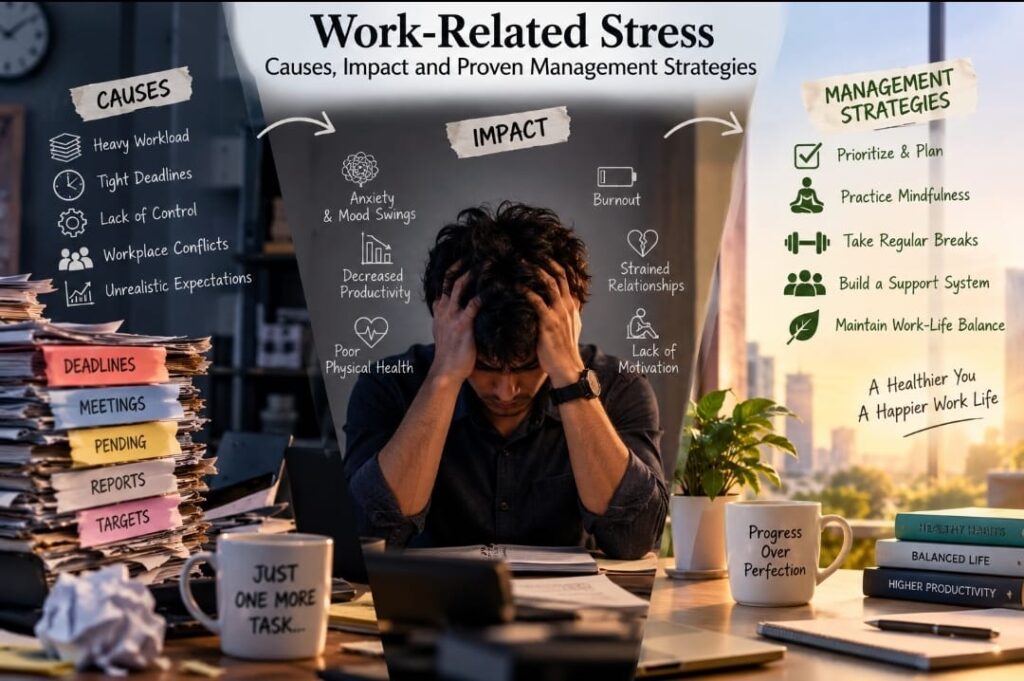
1. Common Sources of Workplace Stress
Workplace stress rarely stems from a single event. Instead, it typically results from a combination of systemic and environmental factors:
According to annual research by the American Psychological Association
- Financial Strain and Career Stagnation: Low compensation paired with minimal opportunities for promotion or professional growth fosters long-term job insecurity and dissatisfaction.
- Excessive Workloads: Unrealistic expectations, perpetual tight deadlines, and chronic understaffing force employees into constant fire-fighting modes.
- Ambiguity and Unclear Roles: Lack of clarity regarding job responsibilities, conflicting demands from management, or inconsistent performance evaluations create persistent confusion and anxiety.
- Lack of Autonomy: Having little to no say in everyday job-related decisions, workflows, or schedules leads to feelings of helplessness and micromanagement.
- Inadequate Social Support: Working in an isolated environment or enduring unsupportive, toxic relationships with colleagues and supervisors removes crucial emotional safety nets.
2. The Effects of Chronic Stress
Stress does not remain confined to the office; it follows you home, affecting every aspect of your well-being.
Physical Health Consequences
When you experience chronic stress, your body remains in a constant “fight-or-flight” state, continuously flooding your system with hormones like cortisol and adrenaline. Over time, this leads to immediate symptoms such as tension headaches, digestive issues, chronic fatigue, and insomnia. Prolonged exposure increases the risk of severe medical conditions, including high blood pressure, weakened immune response, clinical obesity, and cardiovascular disease.
Mental Health and Behavioral Consequences
Mentally, unmanaged stress leads to emotional exhaustion, irritability, difficulty concentrating, and decreased productivity. It is a major contributor to anxiety disorders, depression, and occupational burnout.
Compounding these issues, individuals under extreme pressure often adopt destructive coping mechanisms—such as overeating, reliance on fast food, excessive smoking, or alcohol abuse—which temporarily mask the symptoms while exacerbating long-term health problems.
3. Practical Steps to Manage Workplace Stress
Managing stress effectively requires a proactive combination of personal habits, clear boundary-setting, and workplace communication.
A. Track Your Personal Stressors
To fix a problem, you must first measure it. Keep a stress journal for two weeks to identify your specific triggers. Note:
- The exact situations, times, and environments that raised your stress level.
- The people involved and your immediate physical or emotional reaction.
- How you responded (e.g., venting, seeking isolation, eating junk food, or going for a walk).
Analyzing these entries will highlight actionable patterns in your stress triggers and personal habits.
B. Develop Healthy Coping Habits
Replace unhealthy stress responses with positive, restorative habits:
- Physical Activity: Regular exercise, yoga, or daily walking stimulates endorphins—your body’s natural mood boosters.
- Dedicated Downtime: Set aside time for engaging hobbies, reading, or social activities with family and friends.
- Prioritize Sleep: Build robust sleep habits by turning off screens an hour before bed and limiting late-day caffeine intake.
C. Establish Clear Work-Life Boundaries
In a hyper-connected world, the pressure to remain reachable 24/7 is a primary driver of burnout. Set firm rules for yourself:
- Refrain from checking work emails during family meals or after a specific hour in the evening.
- Silence non-essential work notifications outside of working hours.
D. Take Time to Fully Recharge
True recovery requires completely “switching off” mentally and physically. Use your earned vacation days to step away entirely from work tasks. During regular workweeks, take short, intentional digital breaks throughout the day to reset your attention.
E. Practice Mindfulness and Relaxation Techniques
Integrating brief relaxation exercises into your daily routine helps de-escalate the body’s stress response. Techniques such as deep breathing exercises, progressive muscle relaxation, and mindfulness meditation train your mind to remain grounded during high-pressure situations.
F. Initiate a Constructive Dialogue with Your Supervisor
Healthy employees are productive employees, giving managers a clear incentive to support your well-being. Schedule a dedicated meeting with your supervisor—not to complain, but to present solutions. Focus on:
- Clarifying priorities to handle heavy workloads efficiently.
- Requesting necessary tools, training, or team support.
- Discussing flexible scheduling or ergonomic adjustments to your workspace.
G. Create an After-Work Transition Ritual
To prevent work stress from seeping into your personal life, establish a clear mental boundary that signals the end of your workday.
Physical Reset: Change out of your work clothes immediately after your shift ends or go for a brief ten-minute walk outside.
Digital Shutdown: Close all work-related tabs, shut down your computer, and silence work app notifications until the next morning.
Mindful Reflection: Write down three things you accomplished during the day to create a sense of completion, regardless of unfinished tasks.
4. The True Cost of Ignoring Work-Related Stress
Ignoring prolonged workplace pressure isn’t just uncomfortable; it causes deep structural damage to your long-term health, career trajectory, and personal stability.
Severe Physical Health Breakdown: Chronic stress causes sustained high cortisol levels, leading to hypertension, sleep disorders, digestive issues, and a weakened immune system over time.
Cognitive Fatigue and Reduced Performance: Mental exhaustion limits your brain’s ability to solve complex problems, make strategic decisions, and focus on deep tasks, leading to frequent errors.
Emotional Burnout and Isolation: Unmanaged occupational stress drains your emotional capacity, causing irritability, anxiety, emotional detachment, and strain on personal relationships.
Loss of Professional Motivation: Prolonged stress erodes job satisfaction and enthusiasm, leading to “presenteeism”—where you show up physically but remain mentally disengaged.
5. Building an Organizational Shield: What Employers Must Do
While individual coping mechanisms are important, workplace stress management requires systemic support from leadership and management teams.
Promote Psychological Safety: Encourage an open company culture where employees can express workload concerns or ask for support without fear of professional consequences or judgment.
Encourage Realistic Goal-Setting: Managers should review project deadlines regularly, eliminate artificial urgency, and distribute task loads evenly across team members.
Establish Clear Off-Hours Policies: Leadership should set strict policies against sending non-urgent emails or messages during evenings and weekends.
Provide Accessible Wellness Resources: Companies should offer confidential counseling programs, flexible working arrangements, and comprehensive mental health benefits.
6. When to Seek Professional Support
Self-management techniques are powerful, but severe or prolonged stress often requires professional guidance to prevent complete cognitive burnout.
Recognize Critical Warning Signs: Seek professional help if you experience constant dread before work, frequent panic symptoms, persistent insomnia, or severe emotional fatigue.
Utilize Employer Assistance Programs (EAP): Check if your company offers confidential counseling services, mental health consultations, or referral programs.
Consult Mental Health Experts: Working with a certified therapist, psychologist, or medical specialist can provide you with personalized coping mechanisms and evidence-based interventions like Cognitive Behavioral Therapy (CBT).
7. Frequently Asked Questions (FAQ)
Q1: What is the main difference between normal work stress and full burnout?
Stress usually involves feeling overloaded with demands and trying frantically to meet them. Burnout, on the other hand, is a state of complete emotional exhaustion, detachment, and feeling like your efforts no longer matter.
Q2: How can I tell my supervisor I am overwhelmed without sounding unmotivated?
Focus the conversation on prioritization rather than complaining. Explain that you want to deliver top-quality work and ask your manager to help you order your current tasks by priority so you can focus on what matters most.
Q3: Can a short vacation cure chronic workplace stress?
A vacation offers temporary relief, but it won’t fix structural stress. If the root causes—such as poor boundaries, excessive workloads, or toxic dynamics—remain unchanged, stress will return immediately upon your return.
Conclusion
Managing work-related stress is not about eliminating pressure entirely; it is about building sustainable habits, maintaining clear boundaries, and protecting your cognitive health. By recognizing stress triggers early, organizing your priorities, and leaning on support networks when needed, you can build a rewarding career without sacrificing your personal well-being. Always remember: your employment is a single component of your life, not your entire identity.
Read more :- The art of vibrational healing
